Searches about hair growth, energy, anxiety and weight loss brought up a broad range of websites in Google AI Overviews. The most frequently cited was YouTube.
We tracked 50 vitamin and supplement searches every day for a week, from questions about hair growth and energy to anxiety and weight loss. Across 350 AI Overviews, YouTube was cited in 53.1% of answers, ahead of GoodRx, Healthline and Cleveland Clinic.
Behind that headline was a less predictable pattern: YouTube and GoodRx traded places from day to day, and the same search could produce a different set of sources.
Key takeaways
- YouTube was the most frequently cited website, appearing in 186 AI Overviews and across 44 of the 50 queries.
- GoodRx was its closest competitor, appearing in 48.3% of answers. Healthline followed at 28.6%.
- Only 32.4% of cited pages also appeared in the organic results recorded for the same search.
- AI Overviews appeared in every search we tracked, while the websites they cited kept changing.
YouTube takes the lead in vitamin and supplement searches
YouTube was the only website cited in more than half of the AI Overviews we collected. It appeared almost twice as often as Healthline and reached 88% of the queries at least once during the week.
That reach is what makes the result interesting. YouTube appeared across a broad mix of supplement questions, giving the platform a presence that extended well beyond one topic or one day.
The websites cited most often in AI Overviews
Share of 350 AI Overviews citing each website
| Source or period | Share of AI Overviews |
|---|---|
| youtube.com | 53.1% |
| goodrx.com | 48.3% |
| healthline.com | 28.6% |
| clevelandclinic.org | 28% |
| nih.gov | 25.1% |
| usnews.com | 20% |
| amazon.com | 18.6% |
| webmd.com | 18.6% |
| aarp.org | 17.1% |
| verywellhealth.com | 15.7% |
GoodRx was a strong second, with 169 appearances. Healthline appeared in 100 answers, Cleveland Clinic in 98, and the NIH domain in 88. YouTube also led in total citation occurrences: 526, compared with 399 for GoodRx.
A typical answer linked to about eight pages from seven websites. YouTube was often one source among several, alongside health publishers, clinics and other websites.
Its 526 citation occurrences represented 10.4% of all citations collected. Appearing in more than half of the answers gave YouTube the widest reach, while the links within those answers were spread across many sources.
GoodRx keeps the race close
YouTube finished the week in first place, but GoodRx stayed close. YouTube led outright on three days, the two tied on two days, and GoodRx led on the remaining two.
The biggest gap came on September 3: YouTube appeared in 29 answers, compared with 19 for GoodRx. Two days later, GoodRx was narrowly ahead, 25 to 24.
YouTube vs. GoodRx
AI Overviews citing each website, out of 50 searches per day
| Source or period | YouTube | GoodRx |
|---|---|---|
| Aug 30 | 26 | 26 |
| Aug 31 | 27 | 23 |
| Sep 1 | 24 | 26 |
| Sep 2 | 26 | 26 |
| Sep 3 | 29 | 19 |
| Sep 4 | 30 | 24 |
| Sep 5 | 24 | 25 |
Across the whole week, YouTube and GoodRx were separated by just 17 answers. Both appeared in at least 19 of the 50 daily searches, making them a recurring presence even as the lead changed hands.
Broad vitamin searches are YouTube’s strongest territory
YouTube’s presence was especially strong for searches beginning with “vitamins for.” It appeared in 78.6% of those answers, covering questions about hair growth, energy, immunity, children and other everyday concerns.
The picture shifted across the other query groups. GoodRx led for “best vitamins for” and “supplements to help with,” while YouTube led for “best supplements for” and “supplements for.”
Where YouTube and GoodRx appear
Share of AI Overviews citing each website · 70 searches per group
| Source or period | YouTube | GoodRx |
|---|---|---|
| vitamins for | 78.6% | 52.9% |
| best vitamins for | 42.9% | 50% |
| best supplements for | 47.1% | 44.3% |
| supplements to help with | 44.3% | 57.1% |
| supplements for | 52.9% | 37.1% |
The largest gap between the two appeared in the “vitamins for” group: YouTube was cited in 55 answers and GoodRx in 37. For “supplements to help with,” GoodRx was ahead, with 40 appearances to YouTube’s 31.
The questions ranged from broad searches about energy and hair growth to more specific searches about age groups and medication side effects. Across these different combinations of topics and wording, YouTube led three groups and GoodRx led two.
Organic rankings show only part of the AI visibility picture
The links inside an AI Overview often differed from the ordinary organic results recorded for the same search.
Only 32.4% of the cited pages also appeared in the organic results we recorded for the same search. The other 67.6% were outside that recorded list.
How AI citations compare with organic results
Share of cited pages and websites found in the recorded organic results
| Source or period | In organic results | Outside organic results |
|---|---|---|
| Same page | 32.4% | 67.6% |
| Same website | 52.5% | 47.5% |
When we compared websites rather than individual pages, the overlap rose to 52.5%. Google could cite one article in its AI Overview while showing another page from the same website in the organic results.
Even at the website level, 47.5% of the cited sources were absent from the recorded organic list. The differences therefore extended beyond choosing another page from a familiar website: many AI citations introduced a different website altogether.
The same question, a different set of sources
Every query in our panel produced an AI Overview on every day. The feature was consistent, but its reading list was far more fluid.
Across neighboring days, an average of 48.5% of the distinct pages seen over the two days appeared on both. Websites were a little steadier, with 53.3% appearing on both days. The chart shows how much of each combined source list appeared on only one day.
How much the source list changes each day
Average share of sources appearing on only one of two neighboring days
| Source or period | Pages | Websites |
|---|---|---|
| Aug 30 → Aug 31 | 47.1% | 41.8% |
| Aug 31 → Sep 1 | 53.8% | 48.4% |
| Sep 1 → Sep 2 | 52.6% | 49.9% |
| Sep 2 → Sep 3 | 50.2% | 46.5% |
| Sep 3 → Sep 4 | 54.4% | 46.8% |
| Sep 4 → Sep 5 | 50.7% | 46.8% |
The most changeable query was “supplements for weight loss.” NIH appeared every day, and YouTube appeared on six of seven days, while other websites moved in and out of the answer.
One query, seven different source lineups
Websites cited for “supplements for weight loss”
| Website | Aug 30 | Aug 31 | Sep 1 | Sep 2 | Sep 3 | Sep 4 | Sep 5 |
|---|---|---|---|---|---|---|---|
| aarp.org | Not cited | Cited | Cited | Cited | Not cited | Not cited | Not cited |
| clevelandclinic.org | Not cited | Not cited | Not cited | Not cited | Cited | Not cited | Cited |
| forhers.com | Not cited | Not cited | Not cited | Not cited | Not cited | Cited | Not cited |
| foxbusiness.com | Not cited | Not cited | Not cited | Not cited | Cited | Not cited | Not cited |
| goodrx.com | Not cited | Not cited | Not cited | Cited | Not cited | Not cited | Not cited |
| healthline.com | Cited | Cited | Not cited | Not cited | Not cited | Cited | Not cited |
| joinmidi.com | Not cited | Not cited | Not cited | Not cited | Cited | Not cited | Cited |
| mayoclinic.org | Cited | Cited | Not cited | Cited | Not cited | Not cited | Not cited |
| nih.gov | Cited | Cited | Cited | Cited | Cited | Cited | Cited |
| obesitymedicine.org | Not cited | Cited | Not cited | Not cited | Not cited | Not cited | Not cited |
| osu.edu | Cited | Not cited | Not cited | Cited | Not cited | Cited | Not cited |
| weightwatchers.com | Not cited | Not cited | Cited | Cited | Not cited | Not cited | Not cited |
| youtube.com | Cited | Not cited | Cited | Cited | Cited | Cited | Cited |
Some searches were much more settled. “Supplements to help with glp-1 side effects” returned the same cited pages all week. Even within supplements, different questions had very different visibility patterns.
The questions came straight from Google’s suggestion box
We started with Google Autocomplete: ten suggestions under each of five phrases, giving us 50 searches to follow. The screenshots below show the suggestions we captured on August 29.
The suggestions covered hair growth, energy, sleep and weight management, as well as searches about children’s vitamins and supplements for women over 50. More specific suggestions mentioned prednisone withdrawal and GLP-1 side effects.
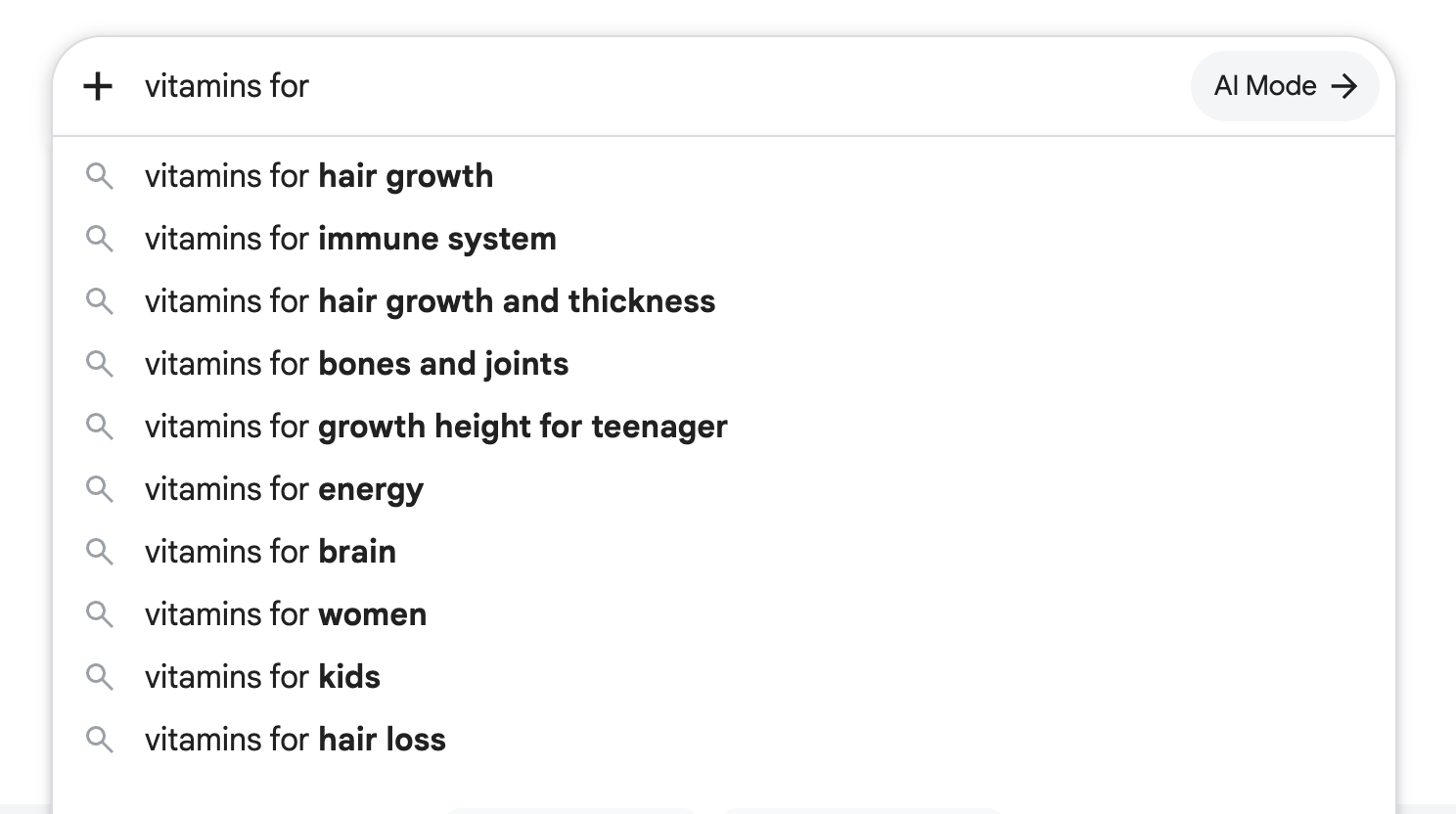
Explore these search queries
- vitamins for hair growth
- vitamins for immune system
- vitamins for hair growth and thickness
- vitamins for bones and joints
- vitamins for growth height for teenager
- vitamins for energy
- vitamins for brain
- vitamins for women
- vitamins for kids
- vitamins for hair loss
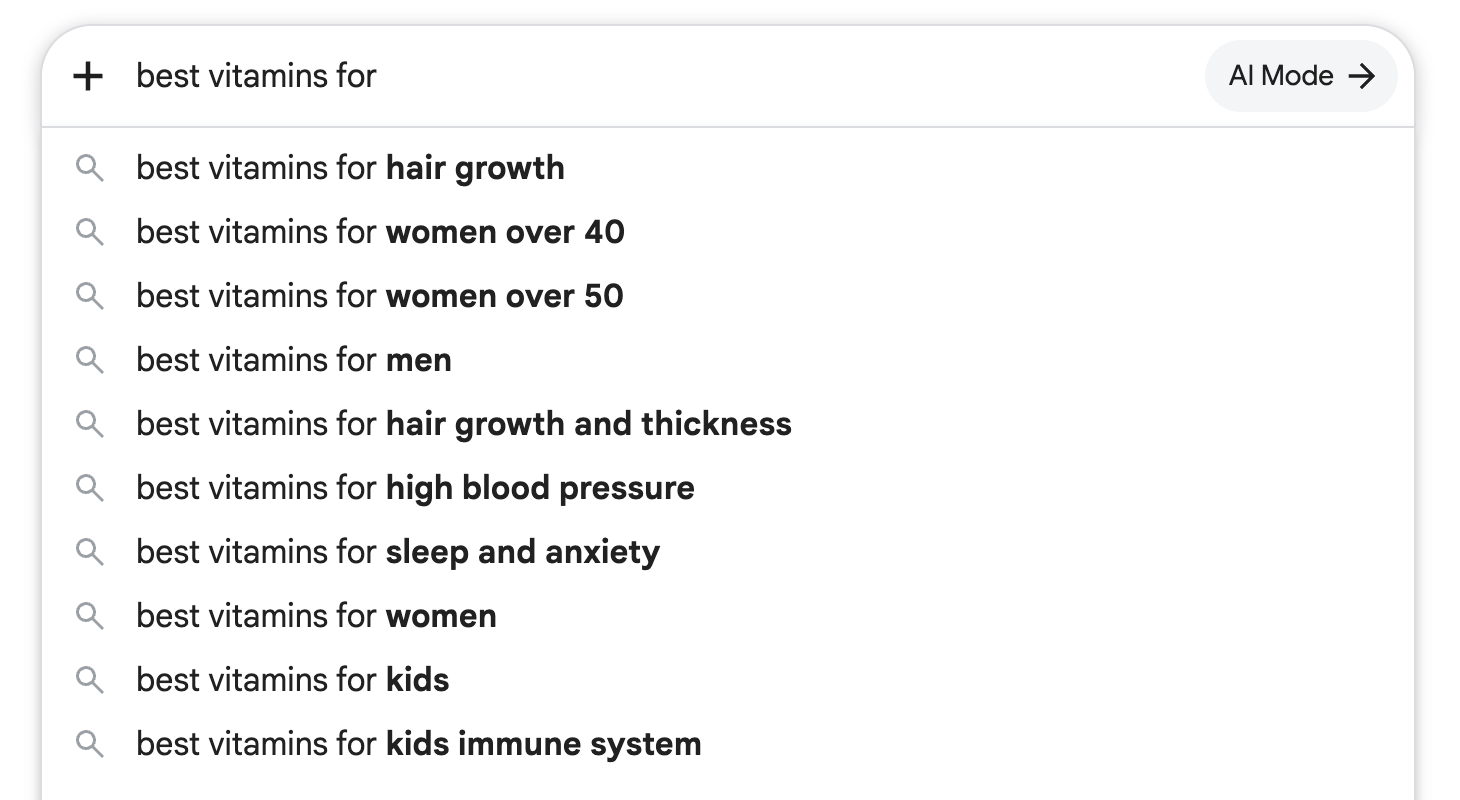
Explore these search queries
- best vitamins for hair growth
- best vitamins for women over 40
- best vitamins for women over 50
- best vitamins for men
- best vitamins for hair growth and thickness
- best vitamins for high blood pressure
- best vitamins for sleep and anxiety
- best vitamins for women
- best vitamins for kids
- best vitamins for kids immune system
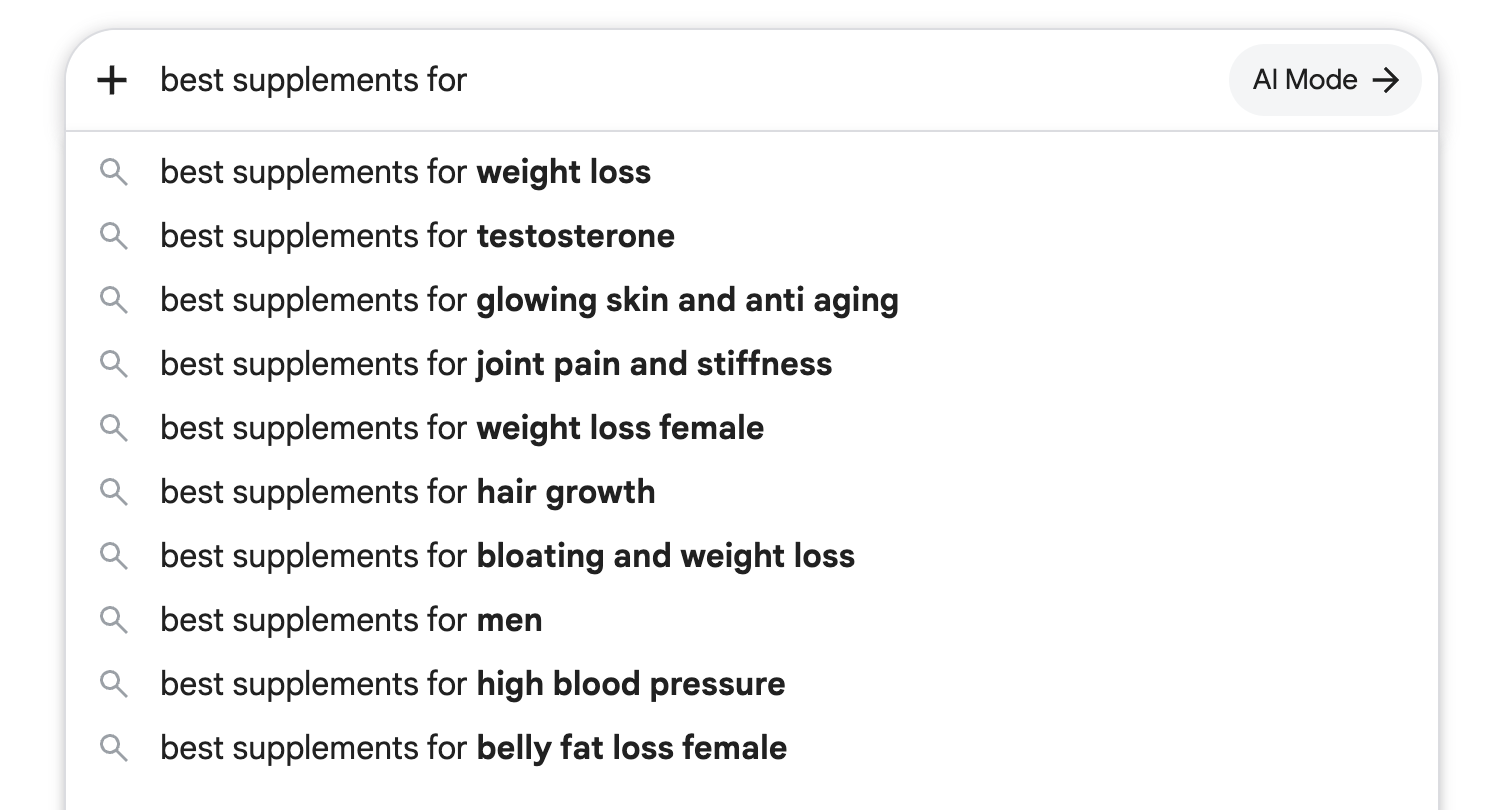
Explore these search queries
- best supplements for weight loss
- best supplements for testosterone
- best supplements for glowing skin and anti aging
- best supplements for joint pain and stiffness
- best supplements for weight loss female
- best supplements for hair growth
- best supplements for bloating and weight loss
- best supplements for men
- best supplements for high blood pressure
- best supplements for belly fat loss female
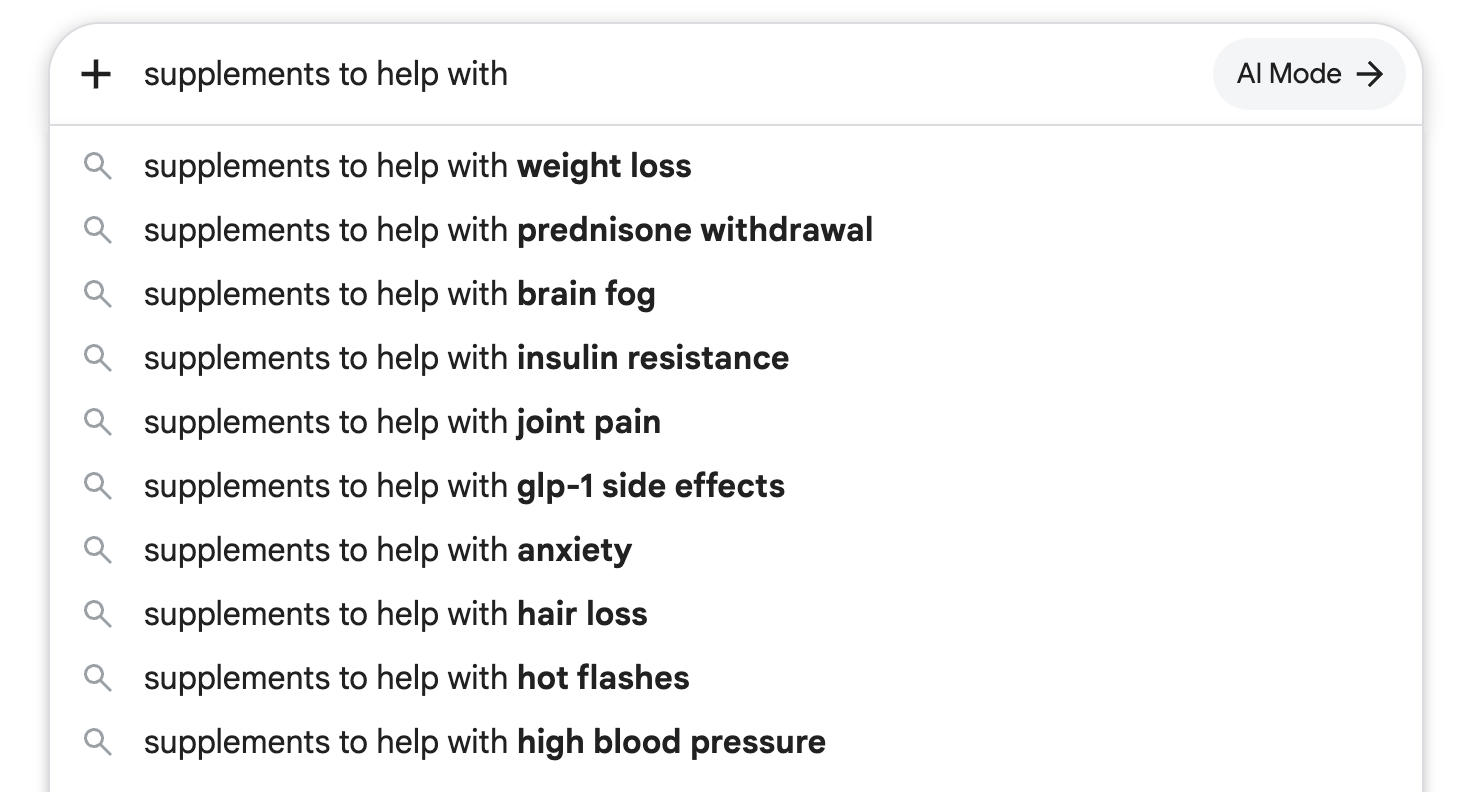
Explore these search queries
- supplements to help with weight loss
- supplements to help with prednisone withdrawal
- supplements to help with brain fog
- supplements to help with insulin resistance
- supplements to help with joint pain
- supplements to help with glp-1 side effects
- supplements to help with anxiety
- supplements to help with hair loss
- supplements to help with hot flashes
- supplements to help with high blood pressure
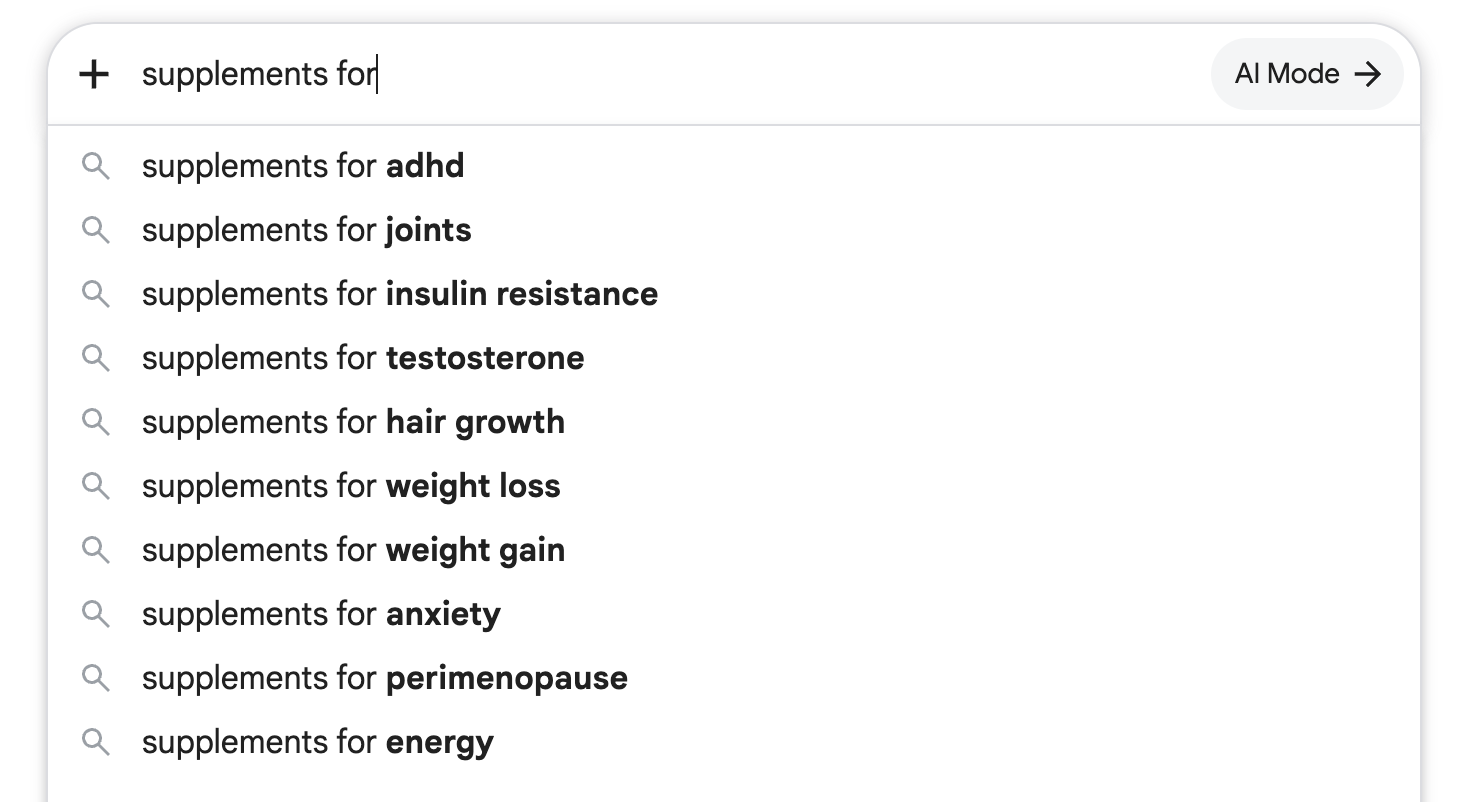
Explore these search queries
- supplements for adhd
- supplements for joints
- supplements for insulin resistance
- supplements for testosterone
- supplements for hair growth
- supplements for weight loss
- supplements for weight gain
- supplements for anxiety
- supplements for perimenopause
- supplements for energy
All 50 suggestions were included, and the list stayed unchanged throughout the week. That allowed us to follow how the answers’ sources changed while the questions remained the same.
A familiar group of websites, a changing set of answers
YouTube had the broadest presence, GoodRx followed closely, and health publishers and healthcare websites remained prominent. Google’s AI Overviews brought these sources together across questions about vitamins and supplements.
The weekly leaderboard was more settled than the individual answers. The same two websites occupied the top spots each day, yet the pages cited for a particular question could change substantially. A recurring source could sit alongside a different set of links from one afternoon to the next.
Familiar names returned often, while the source list behind each answer stayed flexible. YouTube led that mix across both the number of answers citing it and the total number of citation occurrences.
How we did the research
Searcherries monitored 50 vitamin and supplement queries from Google Autocomplete once a day from August 30 to September 5, 2026. We collected US English desktop search results configured for New York, with personalization and caching disabled. The same queries were used throughout, producing 350 valid searches, all with an AI Overview, and 5,036 citation occurrences across 572 pages and 218 websites.
We ranked websites by the number of AI Overviews citing them, counting each website once per answer. Organic overlap compares cited pages and websites with the results returned for the same search. Daily source comparisons measure how much of the combined list from two neighboring days appears on both.
The findings describe this query panel and search configuration. Organic results contained seven to ten returned links per search, and one AI Overview had no extracted citations; excluding that observation barely changed the source-stability result. The analysis measures source visibility, rather than the medical accuracy of the content.
Core data (CSV): search observations, AI Overview citations, and organic results.